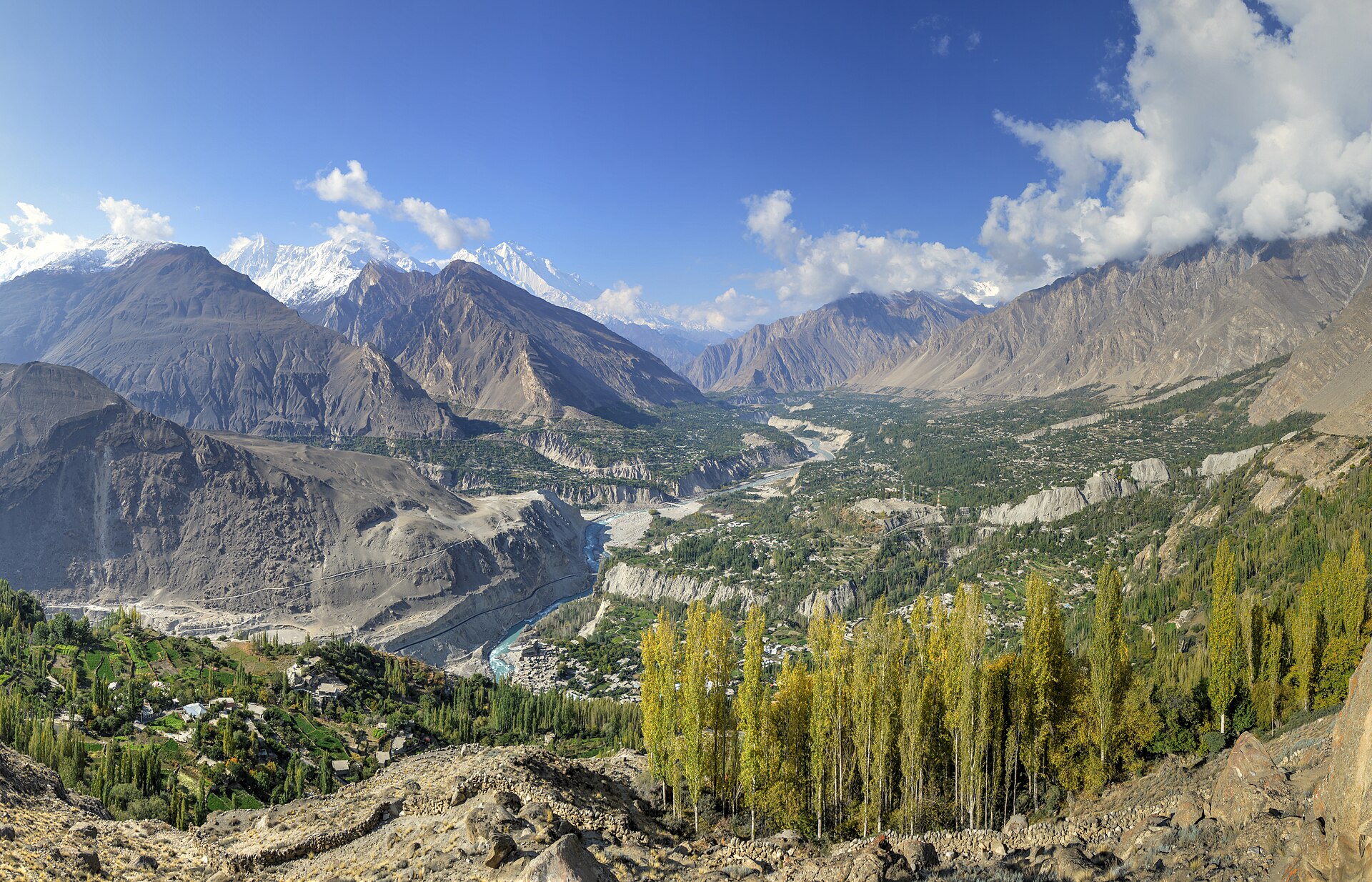
Photograph by Alllexxxis, CC BY-SA 4.0. Not our photograph.
Aliabad · Hunza · Gilgit-Baltistan
Documented mineral specimens from the Hunza valley.
Ruby, spinel and pargasite in white marble, and aquamarine and fluorite from the Nagar pegmatites. Our buyer lives in Aliabad, directly below the marble workings on the ridge, and buys at village level rather than at the third resale. Every piece is recorded with the village it came from at the moment of purchase, inspected under loupe and ultraviolet light, and photographed before any money moves. The specimens ship from Nevada with US shipping and US returns.
- Village-level localityGanish, Dorkhan, Hassanabad Nala, Chumar Bakhoor.
- Loupe and UV on every piece10x on every termination and face. 365 nm for adhesives.
- Photographed before purchaseAgainst a scale reference, before the money moves.
- Ships from NevadaDomestic post, real returns, a seller you can reach.
The market problem
The whole category trades at a distrust discount
Collectors who buy Pakistani minerals price in the risk that they are being told less than the truth, and they are usually right to. Four things go wrong, over and over, and every serious buyer in this market already knows them.
Localities get laundered. The miner knows the village and the working. By the time the crystal reaches a Western seller the label says Pakistan, or at best a regional name like Hunza or Skardu. Collectors pay real premiums for village-level attribution, and that information is lost at the first resale.
Crystals broken during extraction are glued back together and sold as whole pieces. Loose crystals are glued onto matrix they never grew on. Adhesive fraud is the signature crime of this trade.
Photographs are taken wet or oiled so that dull material looks glassy, and what arrives is not what was pictured. When the buyer wants to complain, the account is overseas and returns exist on paper only.
That discount is money left on the table by everyone selling into it. Collecting it requires being able to prove the things other sellers only assert.
What we sell
A specimen and the record that came with it
The record is written in the bazaar, at the moment of purchase, by the person doing the buying. It cannot be reconstructed afterwards. That is why so few sellers have one. This is the shape of it.
Chumar Bakhoor, Sumayar Valley
Aquamarine on muscovite
- District
- Nagar District, Gilgit-Baltistan
- Source
- Stated by the miner at the point of sale
- Loupe 10x
- All terminations and faces examined
- UV 365 nm
- No adhesive response
- Condition
- Contact on reverse. Base broken in extraction, common and not repaired.
- Photographed
- At purchase, dry, against a scale reference
Illustrative layout of a field record. Not a specimen we hold.
Locality is the headline
A village name is worth more to a collector than an adjective, so the village name goes first and the species goes underneath. Where the record does not support a village, we say what we know and stop there. Nothing gets an attribution the purchase record cannot carry.
Condition gets written down
Broken bases and contact faces are ordinary in material taken out with a hammer at altitude. They are recorded plainly. What we will not do is sell a piece that has been glued, at any price, with or without disclosure. That is set out on the refusals page.
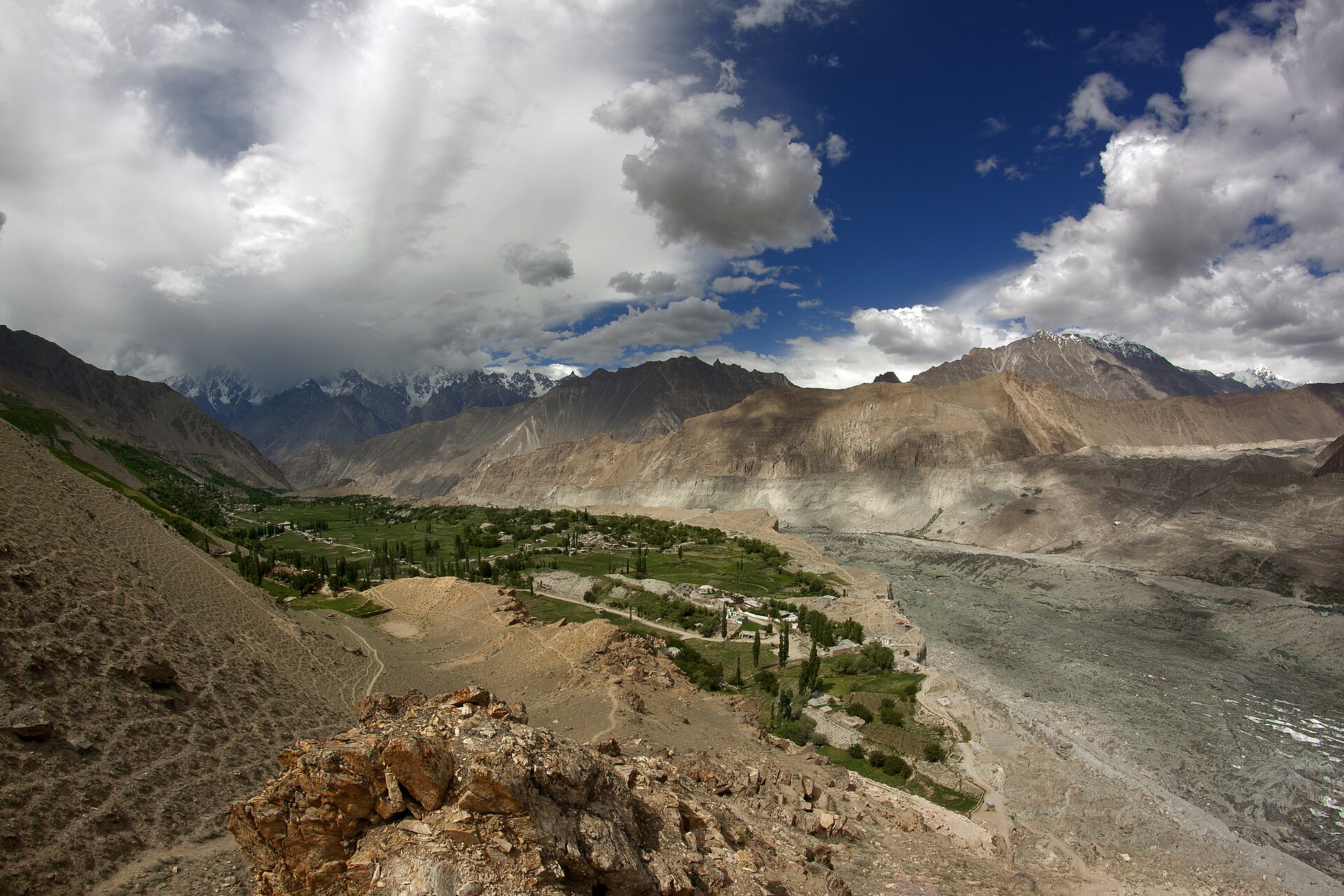
Hopar valley, Nagar district. Photograph by Jamil-ud-din Akhtar, CC BY-SA 4.0. Not our photograph.
The people
It takes more than a buyer
Our buyer is from Aliabad in Hunza, and so is his family. The marble beds that carry the ruby, spinel and pargasite run through the ridge directly above the town, so he lives on that deposit. The aquamarine pegmatites of Sumayar are a separate matter, across the river in Nagar, and that material is bought in the villages below them.
Gilgit remains the crossroads where material from every direction surfaces first, so he works it on a schedule. Chumar Bakhoor itself sold through Gilgit for three years before the mine name became public. What Gilgit cannot offer is the short distance home. The closer a purchase happens to the working, the less the mine name rests on hearsay.
The commercial reason is unglamorous. Dealers bring their best material first to the buyer they see every week and expect to see again. A foreign buyer working the bazaar for ten days is shown what is left, or what is put in front of a visitor. Prices can be matched by anyone tomorrow. Living where the material comes out of the ground cannot.
That is one job out of several. The purchase records are kept and translated by our operations desk in Pakistan. The same desk does the comparables research that decides what a piece is worth. Listings, photographs and customer questions are somebody's full-time work. Receiving, grading and packing happen in the United States. A specimen that reaches a collector correctly described has been through all of it, and any one of those parts failing is enough to lose the sale.
None of it starts without the people who cut the material out of the mountain. They are the first link in the chain and the reason there is a locality to record at all. They are also the ones taking the physical risk.
Where the standard comes from
Concealing a flaw is not a modern problem
Our disclosure rules read like a compliance policy. Their origin is a good deal older than any compliance regime. In the bazaars our buyer works in, misrepresenting what you are selling is forbidden outright, and it has been for a very long time.
The best-known account has the Prophet putting a hand into a trader's heap of grain and finding it damp underneath where the top was dry. Put what is wet where people can see it, he told the man. Whoever cheats is not one of us. The Qur'an is just as direct about short measure and false weights, and it names the practice as theft rather than sharp dealing.
Burying a glued repair under good lighting is the same act as burying wet grain under dry. Everyone in Hunza who handles this material grew up with that standard, and it did not need importing. What we have added is the paperwork.
The workings
Footage from a working
These are frames from four videos our buyer shot on his phone on 23 July 2026 and sent us over WhatsApp. They show an adit, the track running out of it, the waste dump below and hand sorting at the dump.
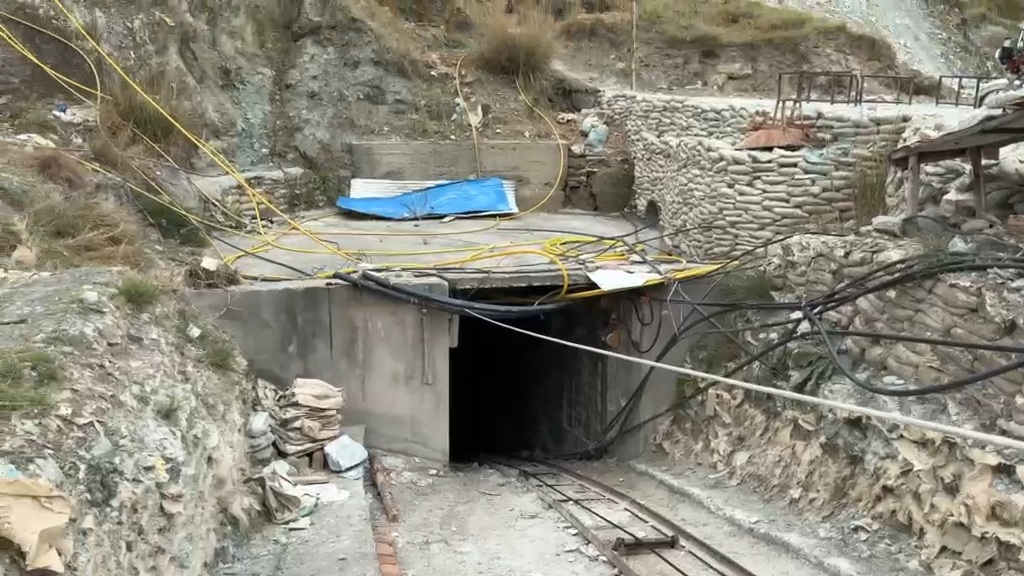
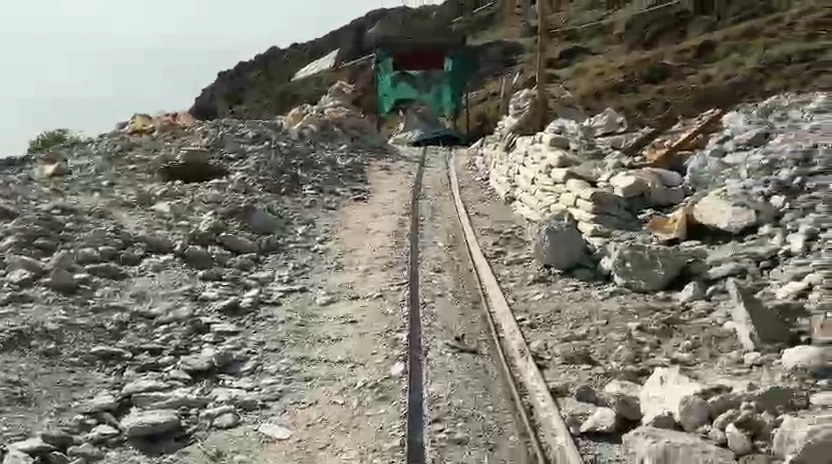
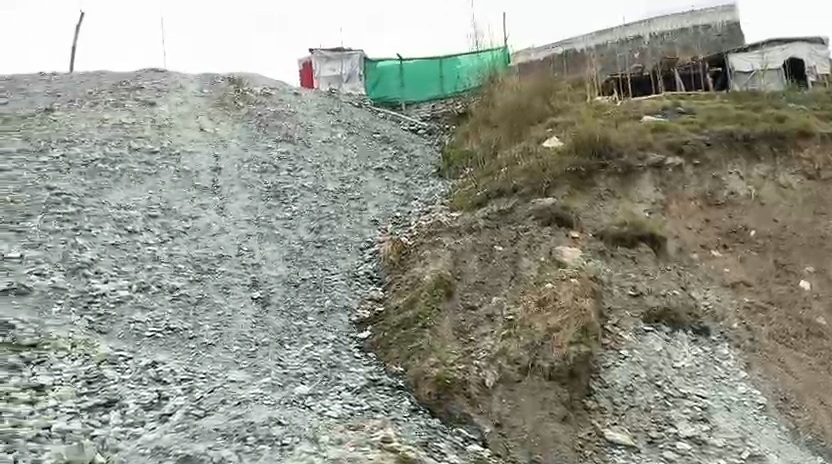
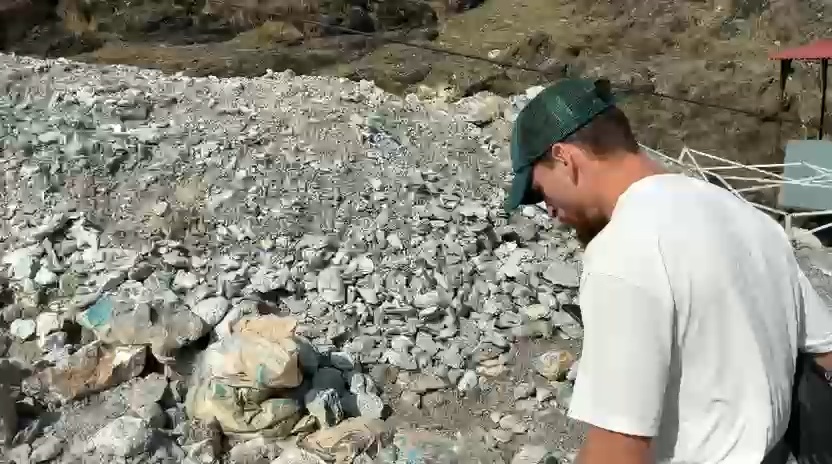
We have not put a village name on these. Our buyer did not send one with the videos, and WhatsApp re-encodes a video on the way and strips the location metadata out of it, so the files cannot supply one either. Naming the valley from the pictures alone would be guesswork, and guesswork in a locality is the one thing this business exists to keep out. Once he confirms which working each video shows, the captions will say so.
Where we concentrate
Going deep on two stones
The ruby, spinel and pargasite of the Hunza marble belt, and the aquamarine and pink fluorite of the Nagar pegmatites. Two rocks, formed in completely different ways, that happen to sit an hour apart. We are building real depth in both, including locality fingerprinting. That is the old dealers' skill of telling which working a stone came from by how it looks. The knowledge is not on the internet and cannot be acquired quickly. We also buy topaz and tourmaline when the quality justifies it.
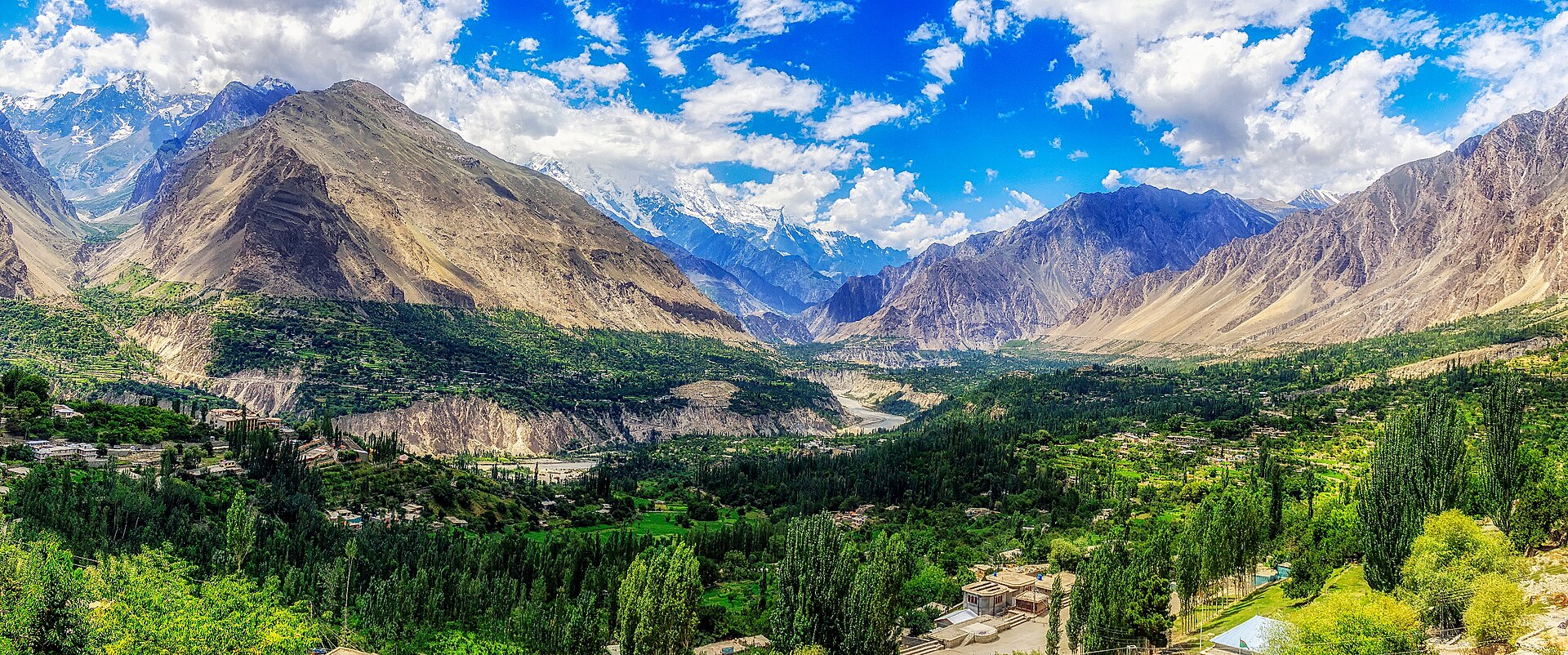
Photograph by Waqas Afzal, CC BY-SA 4.0. Not our photograph.
Why this is hard to copy
These advantages take years to build
Residence
Access to Hunza is not scarce. Anyone with a flight and a budget can buy rocks in Karimabad. Being known is the scarce part, along with being there in the month the good pocket comes out. A digger on the Aliabad ridge sells to the neighbour he will see at Friday prayers before he sells to a visitor. Time in the valley is the only thing that closes that gap, and time is what this arrangement is built to accumulate.
The record is the asset
The minerals themselves are ordinary enough. The documentation regime around them is the point. A Braldu Stone specimen has to be a mineral plus a verifiable history, and verifiable histories from this region are close to nonexistent.
Reputation compounds in one direction
Marketplace feedback, dealer relationships and locality data contributed back to the mineralogical record all accrue to one name. None of it can be bought. It can only be earned in order.
The arrangement is real
Buying, record-keeping, sales and operations are all done by people building careers in the mineral trade of their own country. That is how the business is actually set up. Anyone for whom it is not true cannot copy it.
Where this is meant to end up. The Pakistani company already belongs to the people who run it. The stated goal is full Pakistani ownership of the whole operation, with the buying, the records and the trade itself in their hands. There is no date on that and we will not publish one we cannot keep.
First look
There is nothing to sell yet
Braldu Stone has not yet shipped its first consolidated box. Buying is underway in Hunza now. There is no inventory, no feedback history and no back catalogue, and we would rather say so than pad the site with claims we cannot support.
What we can send in the meantime is field notes from the valley. An occasional letter about the workings, the localities, the seasons, and what is coming out of the ground. It starts now, months before there is a single specimen to sell.
Occasional means occasional. A letter goes out when there is something worth reporting from the valley and never to fill a slot. The first look at the first pieces goes to the same list, before anything is listed.
One address, stored so we can send you the field notes. Nothing else is collected, nothing is shared, and every letter includes a way to be removed. What we do with your address.