How we work
Chain of custody
These are the rules the operation holds itself to, in the order they apply. Each one sets out what has to happen to a piece on its way from the bazaar to the box.
-
A resident buyer at the source
Our buyer is from Aliabad, in Hunza, and his family is from Aliabad. The marble beds that carry the ruby, spinel and pargasite run through the ridge directly above the town. The aquamarine pegmatites of Sumayar are across the river in Nagar, under an hour away. He buys where the dealers answer to their reputations in front of people they will see again tomorrow.
Gilgit still sits at the junction of the region’s trade routes, so material from every direction surfaces there first, and he works it on a schedule. What a base in Aliabad adds is the walk to the working itself. Buying from a base rather than on a trip is what decides which material gets offered first. Dealers bring their best to someone they will see again next week.
-
Village-level locality captured at the point of sale
Every piece is recorded with the specific source given by the miner or dealer who sold it. Ganish, Dorkhan, Hassanabad Nala, Gupa Nala, Chumar Bakhoor in Sumayar. Not Pakistan, and not Hunza when something more precise was said out loud.
Material reaching us from the far side of the region through the trade carries names like Alchuri, Stak Nala and Dassu. The record for a piece like that has to say what it is, bought from a dealer rather than at the working.
Marble-hosted ruby gets a second check. Afghan material from Jegdalek sits in marble too, it moves through Pakistan in quantity, and away from the digging it is easy to relabel. So we look at the rock as well as the crystal. Hunza belt marble carries phlogopite, graphite, pyrite and spinel alongside the ruby, and a piece offered without any of that company is recorded as unconfirmed, whatever we were told. The company being present settles nothing on its own, because Jegdalek marble carries much of the same suite. Absence is what disqualifies.
This information has a short life. It exists in the head of the person holding the crystal and it disappears at the first resale. We capture it because we are standing there while it still exists, and it cannot honestly be reconstructed afterwards by anyone, including us.
-
The inspection every piece gets
A 10x loupe over every termination and every face. A 365 nm ultraviolet lamp across the whole specimen and along the crystal-to-matrix junction, because most adhesives fluoresce under it. An interior clarity check against transmitted light.
The protocol is written into a bilingual field manual our buyer works from, so the same checks happen in the same order whether or not anyone is watching.
-
No repaired material at any price
If ultraviolet finds glue, the piece stays in Hunza. We do not buy or sell glued, repaired or restored specimens, disclosed or otherwise. Most sellers in this trade disclose repairs when asked. Refusing the whole category is simpler to run and impossible to get wrong.
Damage that is not repair gets recorded plainly instead. A base broken during extraction is ordinary in this material and stays in the description.
-
A photographic record made before money moves
Every purchase is photographed at the point of sale against a scale reference, dry, with the terminations and the matrix junction shown. The record therefore exists before the specimen travels, before it is cleaned, and before anyone has an incentive to remember it differently.
-
Honest paperwork
True values on customs declarations, correct country of origin, documented import. This is unremarkable and it is also rarer in this trade than it should be. Asked to declare a shipment below value or to mark one as a gift, the answer is no, and it is the same answer every time it is asked.
-
Fulfilment from Nevada
A consolidated box is opened in the United States and nowhere else. Every piece in it has to be checked again against the field record made at purchase before it is photographed for listing, described, packed and shipped domestically. Returns are real, and the person who packs a box is the person who answers the email.
The second check, in a photograph
What the assemblage screen actually looks at
Our buyer photographed these three pieces in Hunza on 19 September 2026 and sent them over for assessment. Nothing here has been bought and none of it is for sale. They are on this page because the rock in them is what the step above is talking about.
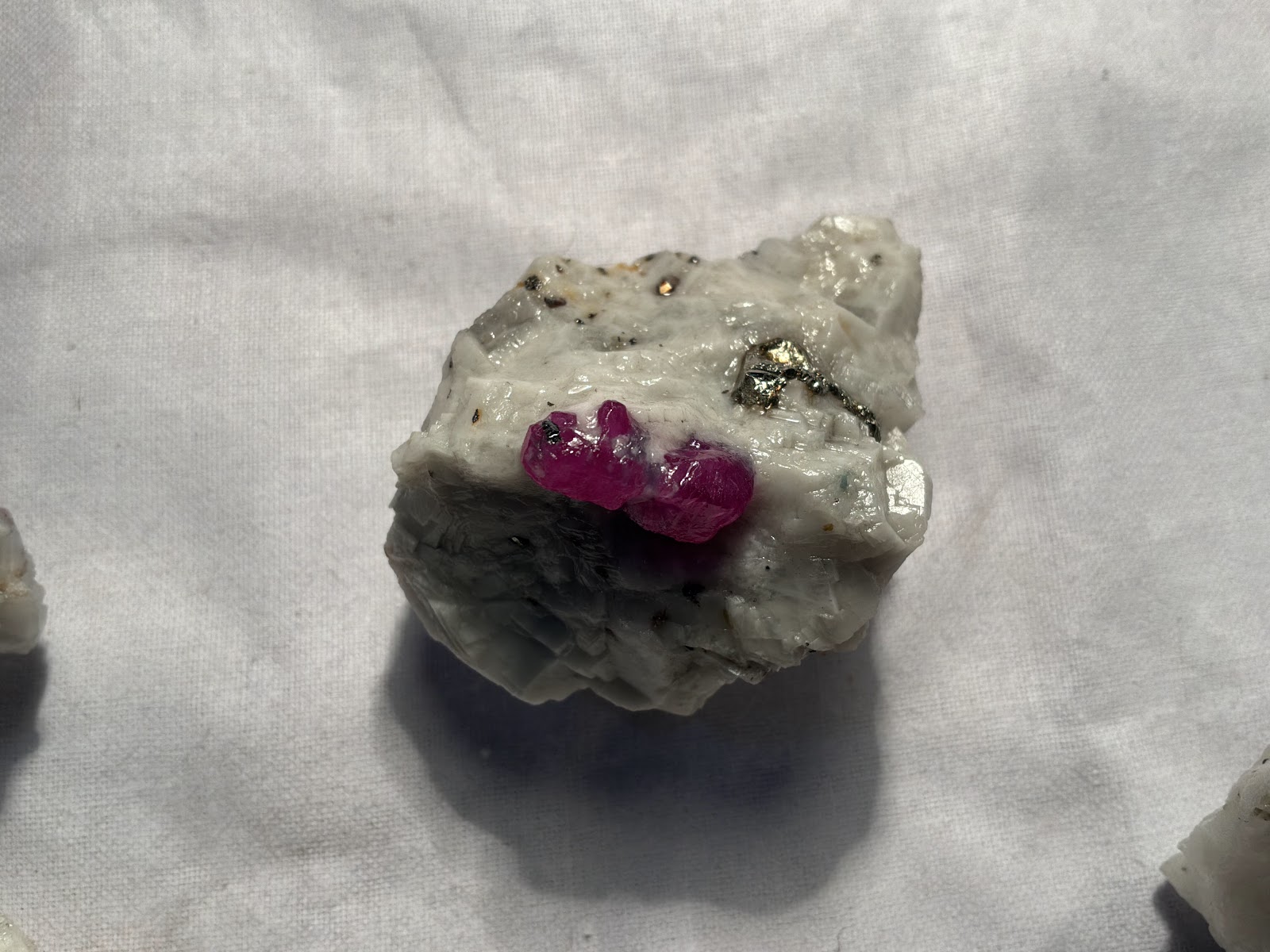
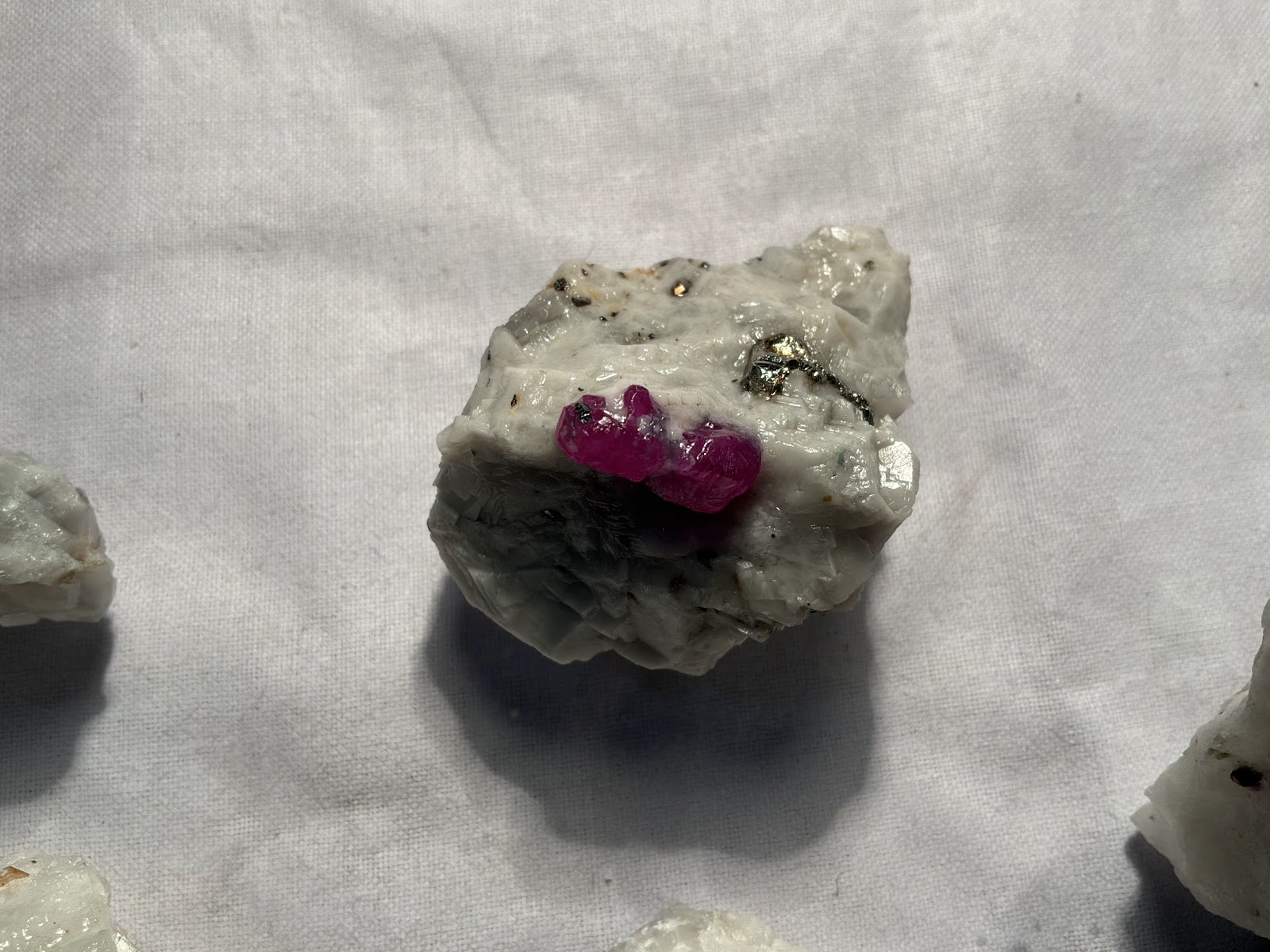
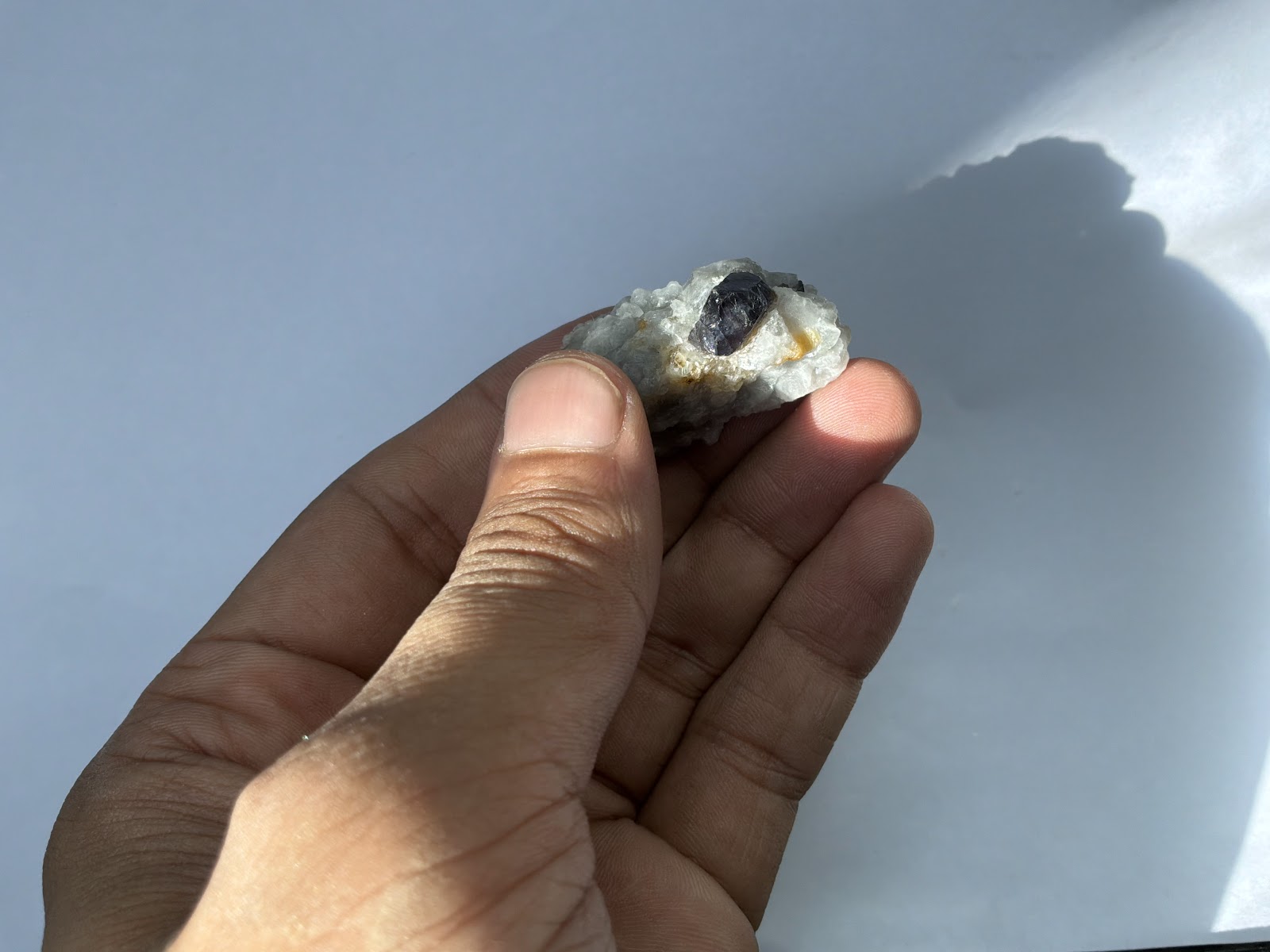
What these three photographs establish, and what they do not. They were taken on the valley floor rather than at a working, so they place the pieces in Hunza and no closer than that. A village name reached us in a message, and a message is not a locality. The company visible in the first two frames is consistent with the Hunza marble belt and settles nothing on its own, because Jegdalek marble in Afghanistan carries much of the same suite. Absence is what disqualifies, so the third frame is the one with a question left to answer.
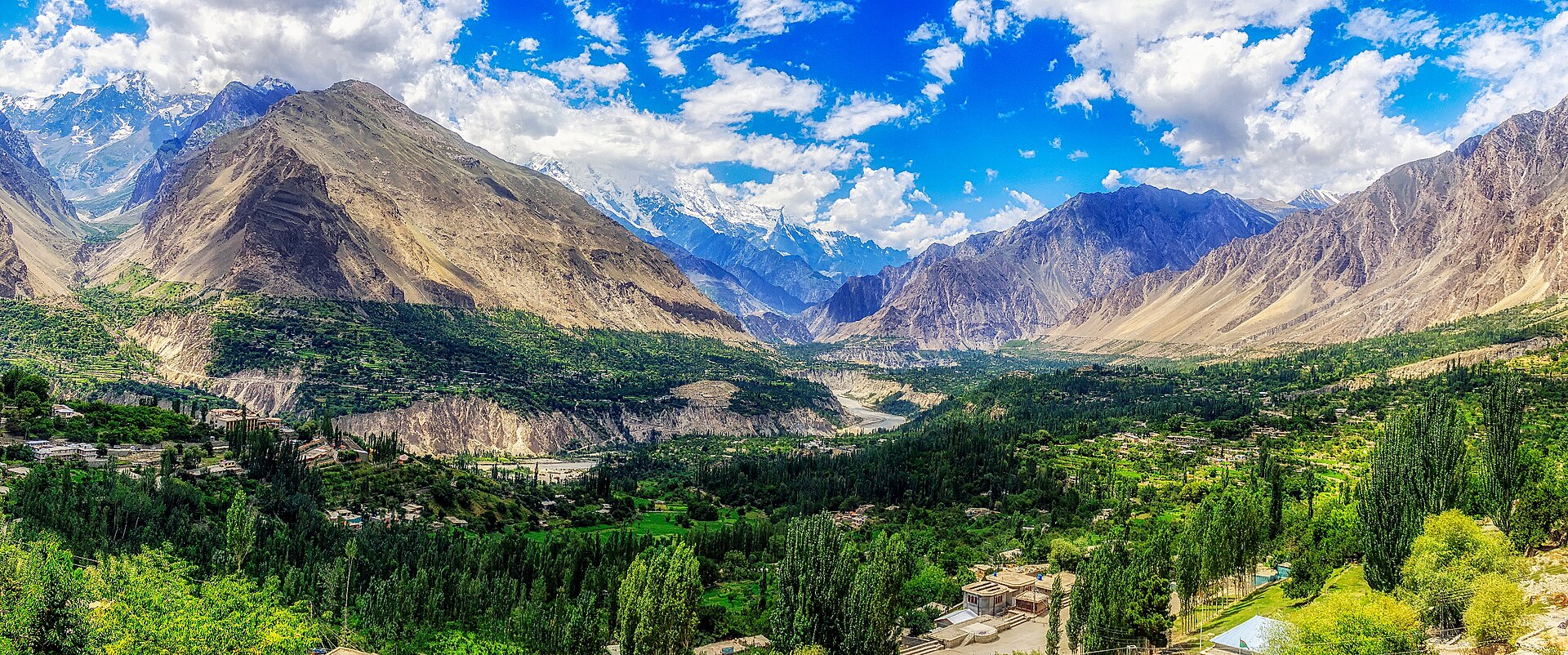
Photograph by Waqas Afzal, CC BY-SA 4.0. Not our photograph.
We say when we do not know
Sometimes a dealer cannot or will not name the working, and the honest answer is a valley rather than a village. That is what the listing will then say. An attribution the purchase record cannot carry does not go on a specimen. Otherwise the rest of the record is worth nothing.